Stocks · World Stock Push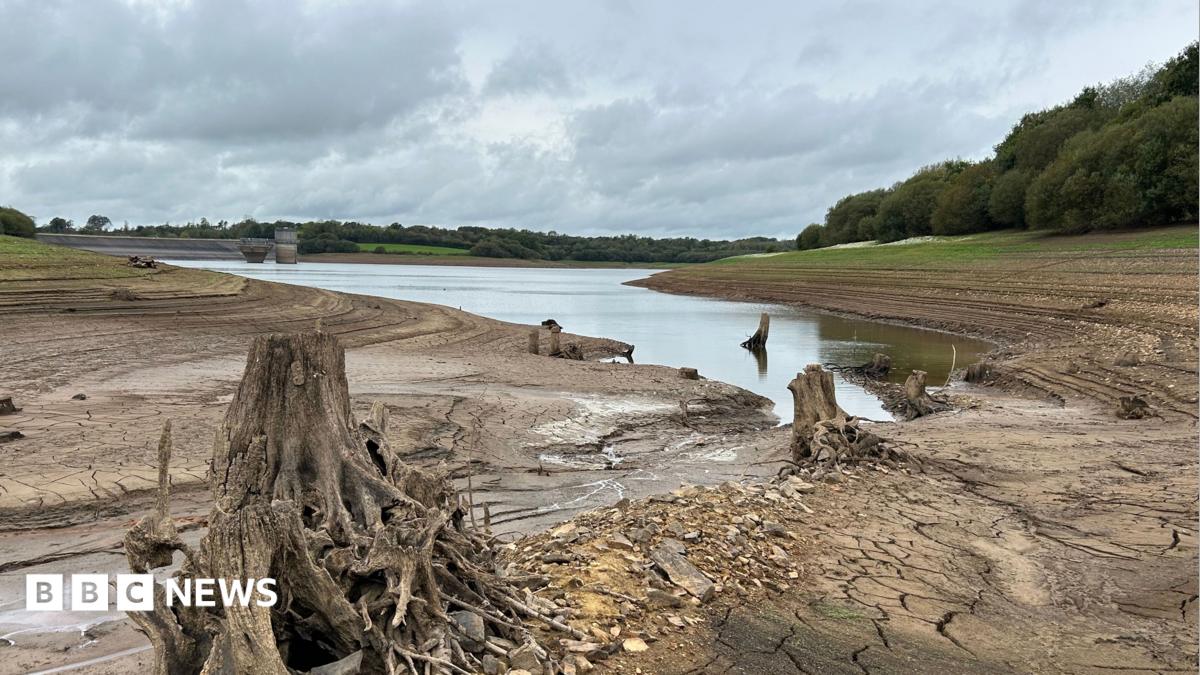
Image caption, The Environment Agency declared parts of the country in severe drought By Zhara Simpson South West Saving water at home needs to be happening all year-round to secure our future supplies not just during the prolonged dry and hot summers, experts say. At the end of July, the Environment Agency declared more than half of England as being in drought and on Thursday it was escalated to severe drought for parts of Cornwall, Devon, Dorset, Somerset, East Sussex, and West Sussex. A Devon campaign group and a water engineer said this highlights the need for behavioural change to prevent wasting water at home.
The average person in the UK uses about 139 (34 gallons) litres of water per day. Image source, Professor Peter Melville-Shreeve Image caption, Professor Peter Melville-Shreeve said we need to save water through the winter Peter Melville-Shreeve, associate professor in technology and innovation at the University of Exeter's centre for resilience in environment, water and waste, said: "I think people perhaps don't really realise how much water we can use at home... it's something we can nibble away at. "I think the key thing with a severe drought is what we need to maintain good behaviour and habits related to being water efficient throughout the year." He said reservoirs were operating on long timescales so if people saved on water through the winter, it would then be available in the summer.
He said: "Saving water and minimising water demand in the summer is not the requirement. "We need to be constantly aware of this and be efficient throughout the year." The Environment Agency (EA) said water supplies had been significantly impacted by high demand following the "exceptionally hot and dry summer", record temperatures and prolonged periods without any rainfall which is set to continue for the rest of October. Rather than replenishing during the autumn, reservoir levels have continued to fall with Wimbleball on Exmoor, which supplies water to about 400,000 people including Exeter, dropping to 14.9% capacity in South West Water's latest data.
Image caption, Nicci Russell said the water supply issues were an "extraordinary situation" Chief executive of campaign group Waterwise, Nicci Russell, said the EA told them there was a five billion litre daily gap forecast for the next two decades, and half of that gap needed to be made up by people being water efficient at home and at work. "We need the behaviour change that goes with it so we're not wasting water in the home and also in the garden. "We're in an extraordinary situation." The Chartered Institution of Water and Environmental Management have called for investment in new reservoirs, but said this is "only part of the solution".
It said more water reuse for things like toilet flushing, irrigation and industrial cooling would also help: "It makes little sense to use highly treated drinking water for such purposes." Russell also said water reuse was one of the things that was "going to save us" because people had caused a "climate emergency". "This is a problem we collectively have created and there is no magic new water we're using... we are using double the amount of water we used 50 years ago." Water-saving tips Russell said reducing the time spent in showers by one minute could save about 12 litres of water every time. She said: "I think some of us have got into the habit of chucking things in the wash every time we use them.
"Only wash your clothes when they're actually dirty as a washing machine cycle can use between 40 to 50 litres." She said another way to save up to 15 litres was by simply turning the tap off while brushing teeth. Melville-Shreeve also said people could reuse sink water for the gardens, harvest rainwater to flush toilets, install aerated taps and only have the amount of water people need in the bath, rather than a "deep, luxurious one". He also said people should be checking if they had any leaks in their homes, including their toilets, and getting them repaired as soon as possible.
He said people should be aiming to use between 80 litres to 100 litres, per person, a day. Image source, Peter Melville-Shreeve Image caption, The University of Exeter's campus installed 120 ultra-low flush toilets People living on the island of Lundy off Devon have already been using extreme water-saving measures such as collecting shower water in a bucket to flush toilets due to the drought conditions. The island's reservoirs reached an all time low of 13% this summer resulting in the teams shipping over four tonnes of water three times a week, and pumping water from its ponds into its holding tanks.
Melville-Shreeve said the at the University of Exeter had installed 120 ultra-low flush toilets that use 1.5 litres of water, and will only flush once the toilet seat is shut. "They're flushing the waste down into the sewage system using air so 30 to 40 litres of air and 1.5 litres of water. "A normal toilet will use 6 litres for a large flush and 4 litres for a small flush." He said over one year in a study, they saved about £12,000 of water in a simple year by deploying the ultra-low flush toilets but unfortunately they were only available for commercial deployment at present.
Follow BBC Cornwall on X , external , Facebook , external and Instagram , external . Follow BBC Devon on X , external , Facebook , external and Instagram , external . Send your story ideas to spotlight@bbc.co.uk , external .
Source: BBC